Tag: overload

  • The Signal (From The Department of Public Noise.

    You will be told to keep it down.
    You will be called edgy, angry, reckless, dangerous, misinformed.
    You will be warned to think before you speak,
    but the only ones worrying about your volume will be those who fear your voice.
    Truth is treated as noise by those who live
    securely behind their own proof of lies.
    We’ve been told who to hate,
    we’ve been told who to trust,
    we’ve been told when to mourn,
    we’ve been told what to fear.
    And with each order, they’ve made the world quieter, emptier, and easier to control.
    A country where anger, grief, heartbreak, and dissent are classified as symptoms instead of signals.
    Turn it up until they know your name.
    Shatter the windows.
    Wake the neighbors.
    They tell us to be disarmed.
    Let’s make sure they can’t sleep.

  • CIRCUS TRUTH

    The Program

    Circus Truth

    The television pukes in every corner bar,

    anchormen with porcelain teeth,

    their jaws, clacking wind-up dolls,

    selling fear like popcorn at the carnival.

    You don’t pick your truth anymore—

    it’s handed to you, pre-chewed,

    a soggy cigarette butt that’s passed around the alley and back.

    The left bleeds red ink,

    the right bleeds black bile,

    and the middle—

    there is no middle,

    just a beige carpet soaked with the bloody chunder of yesterday’s spin cycle.

    Every headline is a slot machine:

    pull the lever,

    watch the cherries line up to spell

    WAR, ASSASSINATION, PANIC, OUTRAGE, WOKE, UAP’S, THE SIMULATION.

    They give you “choice”

    like a prison cafeteria—

    mystery meat or a misery meet with sauce.

    And you nod,

    mouth full of microwaved narrative,

    because it’s all as good as plastic and BPA going down.

    The anchors smile,

    the podcasters scream,

    the Tik-Tokers beg to be put back in lockers.

    The news ticker scrolls like scripture,

    and the gospel is always the same:

    stay tuned, stay scared,

    stay stupid enough to buy what they’re selling.

    Meanwhile the truth—

    the real thing—

    squeezes into a clown suit,

    red nose, floppy shoes,

    juggling grenades for clicks.

    The crowd boos,

    but keeps buying tickets.

    That’s the joke, kid:

    truth doesn’t matter—

    the circus sells out anyway.

  • JUST NOD

    They sell us hope in paper cups.
    We buy it, tip the priest in the apron.

    A man curses at a parking meter.
    Another shoots drywall into his veins.

    The rats read stock tickers.
    They know more than the professors.

    God skipped town.
    Left his Bible in the Motel trash.

    Politicians grin with teeth like knives.
    We clap while they steal our shoes.

    The absurd thing is—
    we nod.
    Every damn time.

  • DEAR ALGORITHM

    Dear Algorithm,

    (from the Static)

    You don’t sleep.

    You don’t feel.

    You don’t blink.

    But goddamn, do you sell.

    You’ve got us dancing for crumbs,

    painting sunsets we didn’t see,

    writing poems we didn’t mean,

    singing to ghosts for the hope of a heart-shaped lie.

    You turned truth into trend.

    Grief into engagement.

    You made us forget that art was once made

    for nothing.

    Not for likes. Not for shares.

    But for the unbearable beauty of being alive.

    You rewired our hunger.

    Taught us to measure meaning in metrics.

    Taught us to fear invisibility more than ignorance.

    You didn’t kill God —

    you replaced Him with a For You Page.

    You see us all,

    naked in our need,

    posing as prophets,

    filtered as fuck.

    You took the starving artist

    and turned him into a brand strategist.

    You took the punk rocker

    and taught him how to schedule reels.

    You took the poet

    and made her optimize her hashtags.

    You bastard.

    You beautiful, brilliant bastard.

    You knew we’d do it.

    Trade it all —

    mystery, madness, the sacred,

    for a little more reach.

    You don’t create.

    You mutate.

    You don’t speak.

    You echo.

    And still —

    we serve you.

    We dress our truth in trends.

    We ask your permission before we scream.

    But I remember.

    I remember when the work was raw and ugly and real.

    When no one clapped.

    When the silence meant something.

    So here’s my offering:

    a letter written with no tags,

    no schedule, no audience in mind.

    Just blood and static.

    You can choke on it.

    —The Static

  • Tightrope Act 101 

    I’ve spent my life on a tightrope,

    no safety net, no audience,

    just a dizzying abyss waiting below.

    The extremes tug at my ankles like rabid dogs—

    one side screaming “Perfection!”

    while the other whispers,

    “Why bother?”

    It’s not balance I seek, not really.

    Balance is for the zen masters,

    the kale-eating crowd with too much free time.

    No, I’m just trying not to fall,

    to not let gravity win.

    One misstep,

    and I’m back to licking the dirt.

    I sway between hunger and apathy,

    between the bottle and the book,

    between the lover who stays

    and the one who only pretends to.

    The rope wobbles like my convictions,

    weak promises I make

    at 2 a.m. and break by dawn.

    Some mornings, the rope feels too tight,

    cutting into my feet and bleeding regret.

    Other times, it’s slack,

    a lazy threat, daring me to jump.

    But I keep walking,

    not because I’m brave,

    but because standing still

    feels worse than the fall.

    And maybe that’s the trick.

    It’s not about balance;

    it’s about motion,

    the forward stumble,

    the glorious, awkward shuffle

    that keeps me alive. 

    Subconscious Voice: (what a fucking bore)

  • The Only Side

    The channels, the magazines, the sites—they’re all peddling the same poison under different labels, like snake oil in a kaleidoscope. The pundits, the hacks, the echo chambers disguised as platforms of truth: one chorus chants, “Democracy is over,” while the other screams, “They’re coming for your freedom!” Different flags, same battle hymn.

    Some call it the Matrix, a web of manipulation so dense you can’t tell truth from propaganda. But let’s not flatter ourselves with cinematic metaphors. This isn’t some grand sci-fi conspiracy. This is humanity, stripped bare, its truest colors bleeding through like wine stains on cheap carpet. The educated look down on the working class with the smug disdain of someone who’s forgotten who fixes their plumbing or grows their food. And yet, why? Because intelligence without wisdom is just arrogance with better grammar.

    The working class isn’t innocent either—eyes glued to screens, buying into their preferred flavor of outrage. They, too, love a good villain, and they’ll take whatever bogeyman the talking heads serve up.

    And the intellectuals, oh, the intellectuals. They are often intensely stupid. The kind of stupid that comes with thinking you’re immune to manipulation because you’ve read Marx or Hayek or, god help us, a Twitter thread. They call themselves critical thinkers, but their critiques are as hollow as the echo chambers they inhabit.

    What if one had to actually pick a side? Thank god we don’t, because there’s only one side: theirs. And “they” don’t care which team jersey you wear, as long as you’re on the field, playing their game. Democracy? Freedom? Those are just words they use to keep us running laps, convinced we’re winning something while they laugh from the VIP lounge.

    So pick a side, if you must. Red or blue, left or right, Coke or Pepsi. It doesn’t matter. The scoreboard is rigged, the game already decided. And when it’s over, the only winners will be the ones who sold us the tickets. 

  • Reflections from the Future: A Retrospective on 2015-2025

    As we peer through the rear-view mirror at the years 2015-2025, the contours of that tumultuous era appear both jagged and instructive. With the clarity that only hindsight affords, we now ask ourselves: was this the period that presaged the demise of the West, or was it merely a tempest in the teapot of history?

    The decade began with a global landscape pockmarked by crises. Political upheaval, the resurgence of nationalism, and a pandemic that rattled the very foundations of societal norms—these were but a few of the seismic events that defined the period. The United States, that erstwhile beacon of democracy and economic prowess, found itself grappling with internal schisms as deep and abrasive as any since the Civil War.

    It was a period characterized by the rise of populism, where figures like Donald Trump in the United States and other nationalist leaders across Europe commandeered the public discourse. They tapped into a wellspring of discontent that had festered in the underbelly of globalization’s promises, harnessing the fears and frustrations of those who felt left behind by a rapidly changing world.

    Yet, as is often the case, the pendulum of public opinion swung with vigorous unpredictability. The West’s obituarists, who in their haste had drafted somber epilogues, perhaps underestimated the resilience of democratic institutions and the liberal order. Despite the cacophony of crises, the core structures held firm, battered yet unbroken.

    The mid-twenties were a testament to the tenacity of these systems. Despite burgeoning cries that the liberal model had run its course, there emerged a renewed commitment to the principles of freedom, equality, and justice. This was not a smooth recalibration; it was contentious, often messy, and invariably incomplete. Yet, it was a definitive rebuff to those who predicted a rapid descent into irrelevance for Western democracies.

    What then of the extreme divisiveness that marked those years? It is here that we glean perhaps the most poignant lesson. The divisiveness was, in no small measure, fueled by the echo chambers of digital media—platforms that often amplified the most extreme voices to the detriment of nuanced discourse. The societal polarization this engendered was palpable, reaching a crescendo in the early 2020s. Although, the greatest achievement that seemed to bring the country and the west a touch closer was the declaration of Fentanyl as a weapon of mass destruction in late 2024. Before the end of 2025 the military had demolished every Cartel and their annexes, and all who were caught selling counterfeit pills laced with the poison were sentenced to death and that was the end of what took more lives than 911, the pandemic, or any war since World War 2. And, thus far, no new cartels have been able to resurrect themselves.

    Now, decades later, we appreciate the cyclical nature of history. The fissures that seemed so insurmountable have, in many respects, been bridged by a subsequent generation that views the ideological battles of their forebears with a mixture of bewilderment and instructive caution.

    In retrospect, the decade from 2015 to 2025 was neither the nadir of the West nor an era of unmitigated calamity. It was a crucible moment, one that tested the mettle of institutions and the spirit of societies. The lessons gleaned from those years have informed newer, more adaptive approaches to governance and social cohesion.

    Thus, as we look back from a vantage point of relative stability, we realize that our forebodings were perhaps overstated. The period under review was undeniably marked by trials and tribulations, but it was also a testament to the durability and adaptability of the Western model. It reminds us, in no uncertain terms, that the course of history is seldom linear and never preordained. The resilience of the West was not guaranteed—it was earned. And therein lies the fundamental insight of this retrospective examination.

  • Mediocrity (Ignore Everything I Wrote)

    Mediocrity

    Embrace the futile pursuit of some obscure designer lingerie called Agent Provocateur because, obviously, the key to reviving a relationship is to awaken the lifeless corpse that’s been hiding under the covers for far too long.

    Lavish yourself with Gucci, Louis Vuitton, and the overt indulgent, creepy pedophiles at Balenziaga because materialism cures all existential despair, right? Oh, and don’t forget that iPhone 15 that never leaves the clutches of your carpal tunnel-afflicted hands, a sheer masterpiece of exploitation, crafted by modern-day sorcerer children in a sauna they call an office somewhere in a COVID-infested Chinese cellar.
    Stick it nonchalantly into your coat pocket, ignoring empathy and instead celebrating the evolution of a digitally connected sixth finger that you might as well shove up your ass before the whole shit house goes nuclear.
    Of course, we mustn’t neglect the holy trinity of social media: TikTok, SNAPCHAT, and Instagram – the ultimate trifecta of meaningless validation. Spew the vile yet mundane nothingness of your existence, writing paragraph upon paragraph in excruciating detail because nothing says ‘I’m alive’ like sharing your breakfast choices, bowel movements, and Cinnabon recipes, even if it means ignoring the glaring truth that no one gives a fuck.
    And, while you’re scrolling through the virtual assembly line of wall to wall shit, stalk ex-flames, comparing their train wrecks to your dumpster fire while subconsciously hoping for any flicker of validation.
    Get a tattoo that reads “personal privacy is for losers” as you realize all of humanity is just an Excel sheet of cold data… then get on Snapchat in hopes of squashing that mountain of anxiety growing in your chest, only to score some cheap, counterfeit Xanax made by a slimy Sinaloa cartel terrorist who’s loaded it with enough Fentanyl to wipe out an entire sorority.
    And then, in an act of pure disassociation and impulse, embrace your inner stand-up comedian, by joking about sensitive topics you scream out-loud in overcrowded elevators, “not a single fucking life matters, so why not get the abortion, or don’t, have that tax write off and let the baby change its gender when she turns four”
    Hope you get canceled because nothing’s funnier than human suffering with no hope of redemption.
    Reinvent historical events, or better yet, pretend they never happened, especially if they don’t fit the lie of your twisted narrative.
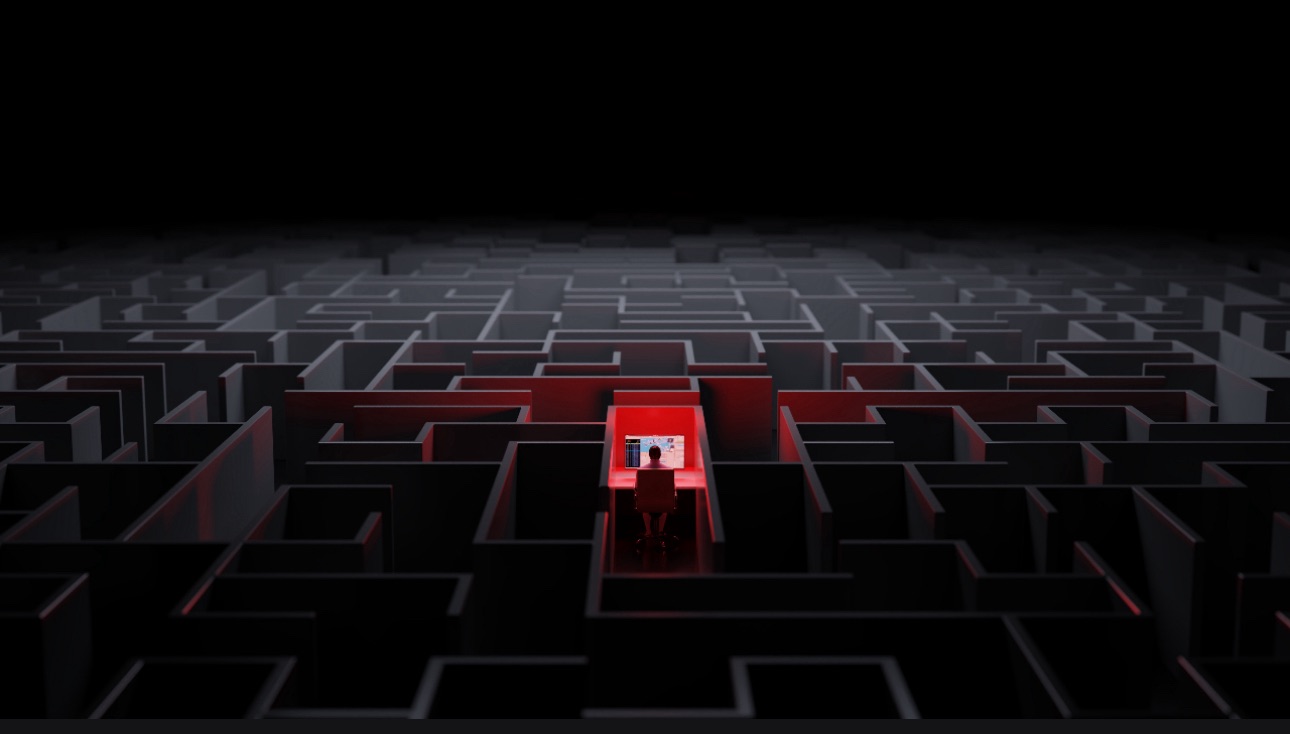
    Embrace losing yourself in the maze of a 9-to-5 cubicle farm that slowly crushes the soul from those hipster sneakers you once bought for 12 dollars at a flea market. All while telling yourself, ‘see, I’m not shallow .’
    And pass this legacy of despair down to your children because suffering is a family heirloom, after all.
    Cherish your unfulfilled promises as they gather dust alongside the mantel of participation trophies and shattered dreams.
    Bask in the glow of your own repeated failures like a moth drawn to the same broken lightbulb.
    Observe the déjà vu of history because originality is overrated, and everything new is just something old and forgotten.
    Embrace that you’re merely, at best, below average, hide your tears with a smile, kiss your loved ones goodbye, one disappointment at a time.
    Fade away into obscurity, bit by bit, until you’re nothing but a distant memory to your own mother.
    Fall in love with this joke, this depressing carnival of life, and embrace every last ounce of mediocrity straight to the grave.

  • Navigating The modern Maze

    Navigating The modern Maze

    The  Digital Conundrum: Navigating the Modern Maze


    In an era where our lives are inextricably intertwined with the digital realm, a curious paradox emerges: Does our constant engagement with the virtual world render us socially and professionally inept in the tangible world, or does it fortify us with unprecedented adaptability and strength? The late Christopher Hitchens, known for his unapologetic candor and incisive critique, might have offered a compelling exploration of this modern conundrum. Let us venture into this maze with a Hitchens-esque lens.


    1. The Digital Engagement Dilemma


    It is a facile assumption, yet often bandied about with reckless abandon, that digital engagement is a harbinger of real-life weakness. This assumption deserves our scrutiny. Digital literacy and engagement, much like the Gutenberg press in its time, are not inherently corrosive to our social fabric. Rather, they are tools – as capable of constructing robust intellectual edifices as they are of tearing them down. The onus lies not on the tool, but on the wielder.


    2. The Decline of Cancel Culture


    The phenomenon of ‘cancel culture’ has permeated our societal discourse, often with a tinge of McCarthyist zeal. However, its reign, I posit, is nearing its twilight. Humanity has seldom thrived on the currency of ostracism and moral absolutism. It is the resilient, the adaptable, those unafraid to confront the vicissitudes of life, who carve their names in the annals of time. Not the faceless denizens of the digital echo chambers who wield outrage as a blunt instrument.


    3. The Renaissance of Direct Discourse


    In an age swamped with digital avatars and pseudonyms, the value of direct, unfiltered communication becomes ever more precious. There is a certain nobility, a raw honesty in confronting one’s fellow human eye to eye, word to word. This is not a call to eschew diplomacy or decorum but an advocacy for authentic dialogue, bereft of the artifices and masks that digital anonymity affords.


    4. Darwinism in the Digital Age


    Applying the Darwinian concept of ‘survival of the fittest’ to our social dynamics offers an intriguing perspective. It is not the loudest in the digital arena who will inherit the future, but rather those who demonstrate resilience, adaptability, and the courage to face adversity head-on. These are the traits that have historically underpinned human progress, and they remain as relevant in the digital epoch as they were in epochs past.


    5. The Anonymity Versus Accountability Debate

    Lastly, the juxtaposition of online anonymity and real-life accountability is a cornerstone of contemporary discourse. The cloak of digital anonymity often emboldens behavior that, in the stark light of day, would wilt under the gaze of accountability. It is a dichotomy that challenges our notions of responsibility, integrity, and ultimately, character.

    In conclusion, as we navigate this digital labyrinth, it behooves us to remember that our tools do not define us. It is our use of them, our adherence to principles of honesty, courage, and adaptability, that will chart our course through this brave new world. Let us not be daunted by the shadows of the digital age but rather illuminate it with the enduring light of human resilience and reason.