Tag: writing

  • The Hour I Stopped Pretending.

    The Hour I Stopped Pretending.

    Are there any activities or hobbies you’ve outgrown or lost interest in over time?

    Today’s prompt asks what hobbies or activities I’ve lost interest in over time.

    The Hour I Stopped Pretending.

    The answer came to me immediately:

    Happy hour.

    Though somewhere along the way, I started calling it Unhappy Hour — not out of bitterness, just accuracy.

    There was a time when I enjoyed it. Or at least, I enjoyed the idea of it. The promise of connection. The belief that if you gathered enough people in one place long enough, something meaningful might eventually happen.

    And sometimes it did.

    ——————————————————

    But over the years, my relationship with time changed.

    Part of that is practical. I don’t drink anymore, which turns social rituals into something easier to observe than participate in. Without the soft blur of alcohol, you start to notice patterns — conversations looping back on themselves, laughter arriving a half-second too late, people searching for the next safe thing to say.

    It begins to feel less like connection and more like choreography.

    Nobody’s doing anything wrong. In fact, everyone is usually trying their best. But there’s a quiet performance happening — an agreement to stay on the surface where things feel manageable.

    And maybe that’s where I drifted away.

    Because what I realized is that I haven’t lost interest in people.

    I’ve lost interest in pretending.

    Time stops feeling infinite at some point. You begin to understand that every hour carries weight, whether you acknowledge it or not. And once that shift happens, the idea of spending it in conversations that never leave the shallow end starts to feel… expensive.

    These days, I find myself wanting fewer interactions, but deeper ones.

    Conversations where nobody is trying to win.

    Where silence is allowed to breathe.

    Where you can say something real without watching it bounce awkwardly off polite smiles.

    Maybe that makes me less social by traditional standards.

    Or maybe it just means I’ve become more honest about what connection actually feels like.

    I still believe in gathering. I still believe in laughter. I still believe in the magic that happens when the right people sit down together and forget to check the time.

    But I no longer believe proximity alone creates meaning.

    So yes — happy hour is probably the activity I’ve lost interest in.

    Not because I’ve lost my sense of humor.

    Not because I dislike people.

    But because I’ve learned that time is the one thing that never comes back once you’ve spent it.

    And if I’m going to give mine away, I want to know it mattered.

    –

    These days, I don’t avoid happy hour because I’ve become less social.

    I avoid it because I finally learned the difference between passing time and living inside it.
  • My First Computer Was A Mirror

    My First Computer Was A Mirror

    Write about your first computer.

    My first computer wasn’t mine.

    It was my old man’s.

    He had an Apple IIe back when Michigan still thought a “home computer” was something you yelled at. My father collected firsts the way other men collected regrets. Not to brag — to know. He wanted to see how the future worked before it decided what it was.

    That machine sat in our house like a glowing confession booth. Green letters on a black screen. The future, stuttering.

    Mine showed up in 1997.

    By then, the future had learned how to sell itself.

    That was the year I became that guy — the one who corrected people at parties over a commercial.

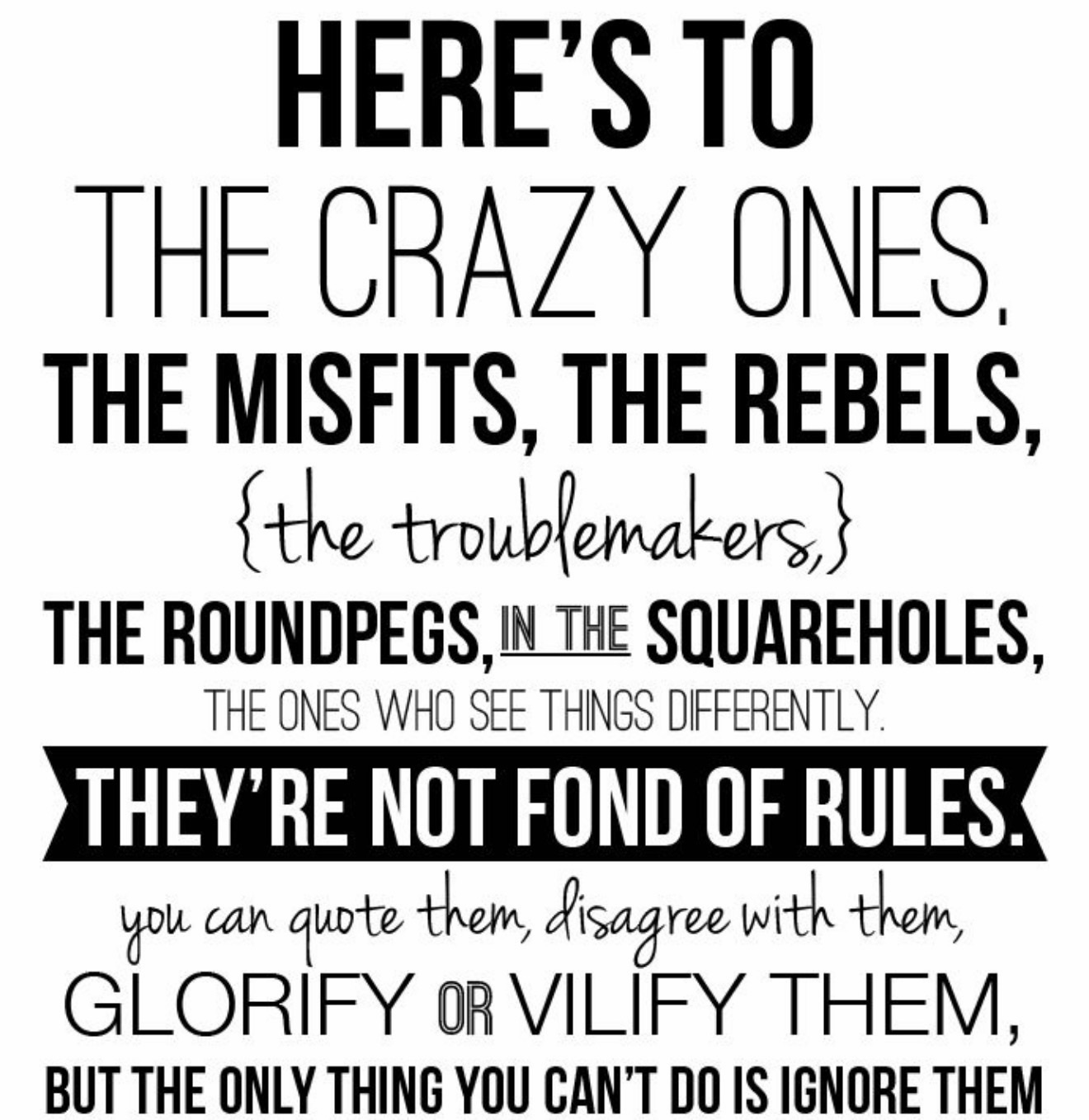
    “Jobs didn’t write that,” I’d say, beer in hand, moral high ground wobbling under my feet. “That’s beat poetry in a business suit. He just stole it and slapped a logo on the ribs.”

    I called it blasphemy — using dead poets to move plastic and silicon.

    But I respected the hustle.

    Because in one clean, arrogant move, he didn’t sell you a computer.

    He sold you a seat at the same table as Einstein and Gandhi and Picasso.

    Buy this machine and maybe, kid, you’re one of them now.

    I couldn’t tell if Jobs was in a garage somewhere burning his fingers on a soldering iron…

    Or just the best preacher Silicon Valley ever produced.

    While all that was flashing across the TV, I was in my room discovering a different sin.

    I started writing.

    In 1997, writing poems on a computer felt like cheating on paper. My classmates were bleeding into notebooks, breaking hearts in cursive. Love songs, death songs, soft-focus misery.

    I was staring at a screen, trying to figure out how to be a hard version of Sylvia Plath without driving my own car into a lake.

    I tried pretty metaphors. Lakes as mirrors. Souls as reflections.

    I hated all of it.

    So I wrote my first real poem instead:

    “Dionysus and the Silver Spoon.”

    It was about a man who treated excess like oxygen. A drunk god in a borrowed suit who thought the world owed him women, wine, and a standing ovation.

    It wasn’t mythology.

    It was me with better lighting.

    And that’s when the joke landed.

    There I was, calling out Jobs for dressing up as Kerouac…

    While I was wearing Plath and dead gods like a Halloween costume, hoping someone in the room would clap.

    That computer didn’t teach me how to write.

    It taught me how to look at myself without flinching.

    It showed me the hunger. The vanity. The quiet little prayer every creative mutters when no one’s listening:

    Please don’t let this be invisible.

    So yeah.

    My first computer wasn’t a machine.

    It was a barroom mirror at 2 a.m.

    The kind that doesn’t care who you think you are.

    It just shows you who’s still standing.

  • The Physics of the Line

    What makes a good leader?

    Haha

    The Physics of the Line

    he must be a man who has

    tasted the barrel of the gun

    and found the metal

    cold and honest.

    he must have burned down

    his own house,

    sat in the ashes,

    drinking cheap scotch from a

    cracked mug,

    and decided to build it back

    without a single nail of

    pity.

    he must be dangerous.

    a violent thing

    wearing a quiet suit.

    a wolf who learned

    a knife and fork

    so the children don’t notice

    the teeth.

    he takes the screaming chaos

    of the universe,

    runs it through his ribs,

    and hands it back as

    calm instructions.

    he is the wall in the wind.

    the father who stays awake

    so the family can dream

    of meadows.

    we write books about him.

    we carve his face

    into mountains.

    we argue over

    vision,

    grit,

    the holy mechanics

    of command.

    burn the books.

    sand the statues down

    to dust.

    spit on the philosophy

    until only pavement

    is left.

    the answer is not in the man.

    it is in the space

    behind him.

    you ask what makes a

    good leader?

    turn around.

    if there is no one there,

    you are just a man

    taking a walk.

    if there is a line of

    warm bodies

    mistaking your shadow

    for a map,

    following your heels

    into the fire—

    congratulations.

    you are a leader.

    the rest is just

    marketing.

  • Dr. Falls Freud 2: The Refill

    (The Diagnosis Was Wrong, But the Confidence Was Strong)

    “Doctor, the patients are restless.”
    Good.
    If they were calm, I’d think the meds were working.
    Hand me the clipboard—
    the one covered in my old resentments
    and your new insurance co-pays.

    The refill

    I need a refill
    on whatever I prescribed last time.
    Don’t check the dosage—
    I wrote it during a blackout
    and the AMA refused to comment.

    Bring in the next disaster.
    Who is it?
    Ah yes—
    the man allergic to responsibility
    and addicted to horoscopes and whores.
    Put him in the trauma bay;
    tell him Mercury’s been in retrograde
    since his third divorce, and Amber retired anyway.

    And someone get me my reading glasses.
    Not to read—
    just to look smart
    while I guess wildly.

    The nurse asks,
    “Doctor, are you okay?”
    Of course not.
    I’m a mental health professional.
    We don’t heal—
    we outsource.

    Now… where were we?
    Ah yes, the refill.

    RX #1:
    Take one truth
    with two lies
    and chase it with a childhood memory
    you haven’t processed yet.

    RX #2:
    Apply gratitude
    directly to the wound.
    If burning occurs,
    good.
    It means you’re still alive.

    RX #3:
    Stop saying
    “everything happens for a reason.”
    Everything happens because
    people are irresponsible
    and God clocks out early.

    Next patient, please.

    Mr. Ego returns—
    as usual—
    complaining of a swollen sense of self.
    I recommend ice.
    Preferably Antarctica.

    Miss Co-Dependence is back too.
    We tried cutting her off last visit,
    but she refused
    because she “didn’t want to be rude.”
    We’ll keep her overnight.

    And you—
    yes, you—
    the one pretending to be fine
    because you bought a new candle.
    You need a refill most of all.

    Your diagnosis?
    Life.
    Chronic.
    Terminal.
    Relapsing and remitting
    but mostly just remitting.

    The nurse hands me a chart.
    The chart hands me my fate.
    I stare into it, horrified.
    “My god… is this my handwriting?”
    No wonder half the patients
    left the building enlightened
    and the other half
    started a podcast.

    Time of day:
    who knows.
    Cause of day:
    capitalism.
    Treatment plan:
    “fuck around and see.”

    I sign the discharge papers
    with the confidence of a televangelist
    and the accuracy of a man
    throwing darts in the dark.

    Before I leave,
    I grab my coat,
    my stethoscope,
    and the final universal truth:

    Nobody’s cured.
    We just refill the prescription
    until the bottle or the body
    runs out.

    Fade to black.
    The credits roll.
    Freud slips again.

  • 19 Feminists

    Nineteen feminists
    —yeah, nineteen—
    were sentenced today
    for laundering bra straps.

    Not the Steinem warriors.
    Not the women who marched, bled, built, changed the goddamn world
    while men smoked on the porch
    and called it thinking.

    No.
    These were the new models.
    The knock-offs.
    The grievance influencers.
    Feminism with a filter.
    Oppression with a promo code plus a series of weak hashtags that only resignate with band wagon broads who’ve never turned the pages of a book beyond Woman’s World.

    And the prosecution—
    a collection of men
    who still need two hands
    to operate a zipper—
    said the defendants got “girly”
    with a plea bargain.

    Meaning:
    they spoke clearly.
    And weren’t apologizing
    for taking up oxygen.

    Then the judge—
    God bless him—
    a man whose worldview
    was embalmed sometime around
    the Reagan administration,
    issued his verdict like a man auditioning
    for a parody of himself:

    Women. For life.
    No parole.
    No shopping.

    The courtroom gasped.
    Mostly because the judge thought
    he was being edgy.

    And in the back?
    Steinem’s generation.
    Arms folded.
    Looking at this circus like teachers
    watching students
    act out Hamlet using emojis, and incomplete sentences.

    Attention all gentlemen:
    a few of these new-breed feminists
    are still on the loose.
    Yes, you’ll know them.
    They weaponize victimhood
    like pepper spray,
    and treat every polite man
    like a war criminal
    who forgot to Venmo reparations.

    But—
    listen to me now—
    if you’re one of the rare good men,
    the real ones,
    the diaper-changing,
    emotional-labor-sharing,
    I’m-here-I’m-present-I’m-accountable men—
    you’re safe.
    You’re invisible.
    They don’t attack you. Because they know you aren’t a murderer but are capable of doing so with your barehands if that means protecting the woman you love.

    They only go for men
    who look like authority
    or know how to use a wrench.

    If you get “hard up,”
    the state recommends:
    Handle it yourself.
    Safest option.
    Least paperwork.

    Ignore that
    and you’ll find yourself
    caught in the spin cycle—
    tumbled, shrunken,
    and left in the lint trap
    next to every man
    accused of sins such as
    “interrupting,”
    “breathing confidently,”
    or “existing while male
    in the general vicinity
    of a complaint.”

    Outside the courthouse?
    Oh, it gets better.
    They’re shouting
    “GLORIA STEINEM! PROSTITUTION!”
    like it’s a spell
    that summons empowerment
    instead of proving they’ve never read
    a single goddamn thing she wrote.

    Somebody tell the prosecution
    this is community service.
    A PSA.
    A reminder:
    that real feminism is a movement,
    not a mood swing with a merch table.

    Meanwhile the doctor—
    who’s clearly done with everyone—
    sent his report:
    “Surgery successful.
    Patience drained.
    Shirt removed.
    Libido parked.
    Safest place for it.”

    He’s running on empty,
    but insists feminism
    stole the gas cap.

    This from a man
    who’s been firing
    homemade grenades
    of insecurity into every conversation
    since 2009.

    It is not easy—
    trust me—
    being a man
    married to the cleaning lady
    when the cleaning lady
    is the only person in the house
    who understands equality
    and how a washing machine works.

    P.S.
    Before you forget—
    help your wife
    with the laundry.
    Not to earn points.
    Not to look woke.
    Not to impress anybody.

    Do it
    because lifting your own weight
    is the oldest
    and sexiest
    political statement
    you’ll ever make.

    Mccarthy, not Cormac, Jamie McCarthy
  • Gratitude (2025 Edition) By McCarthy, not Cormac, Jamie McCarthy

    Gratitude isn’t a prayer or a posture.

    It’s a scar that still throbs when the weather turns—

    a reminder you’re somehow still here

    while the world keeps finding new ways

    to set itself on fire.

    It’s outliving a son

    and carrying his brilliance like contraband

    through a year that tested everyone’s faith

    in everything.

    It’s knowing the gods are broke,

    the politicians are puppets,

    the prophets are running side hustles,

    and the news is just a fear carousel

    you didn’t buy a ticket for.

    Gratitude doesn’t live there.

    It lives in the cracked places:

    the dog who curls against you

    like she’s guarding what’s left,

    the laugh you didn’t think you had in you,

    the friend who calls before the collapse,

    the night that lets you pass without a toll.

    It lives in the chaos we survived

    and the beauty that somehow survived us.

    Keep it small.

    Keep it sharp.

    Pocket-sized and battle-ready—

    your own stitched-together compass

    for a world that keeps losing north.

    Remember:

    you’ve been broken open,

    but you’re still walking.

    You’re still dangerous.

    You’re still here.

    Mccarthy AKA FATHER SICARIO

  • 🎙️ Ode to Miscast Men

    (Response to misinformed feminist poet)

    Not every shoulder in an airport is a declaration of war.
    Some are just men…
    half-awake,
    burning their tongues on bad coffee,
    late for gate C17,
    thinking about rent,
    or their kid’s soccer game.
    But someone writes a poem,
    and suddenly he’s the businessman —
    the villain.
    The sting without the bee.

    Not every man who said, “I don’t believe in labels,”
    was dodging a leash.
    Some just hated boxes,
    the way words lock living things inside.
    Some of them loved harder without a label
    than others did with rings.
    But nobody writes poems about those men.

    He said he liked her hair another way.
    Maybe it reminded him of his mother,
    the woman who read him bedtime stories
    when the world was falling apart.
    But in the poem, he’s a chauvinist.
    No cross-examination allowed.

    There were men who fixed the leak at midnight.
    Men who held doors,
    held breaths,
    held their tempers while the world baited them.
    But they got folded into the punchline.
    Another “boy” in a list of wrongs.
    Their quiet was mistaken for guilt.
    Their hesitation, for harm.

    Some said “period sex is gross”
    because no one ever taught them otherwise.
    They weren’t gagging at her.
    They were gagging on their fathers’ silence.

    The one who didn’t say I love you fast enough?
    He wasn’t a monster.
    He was terrified.
    Not of love —
    of being written into someone else’s vengeance poem.
    He was standing at the ledge of his heart,
    waiting for a language that wasn’t a trap.

    Not every man who walked away was running.
    Some just got tired
    of opening their mouths
    and hearing the same labels echo back:
    chauvinist.
    toxic.
    boy.
    Their stories were pre-written.
    Their names replaced with archetypes.

    This isn’t some rehab for men.
    This is an ode to the mislabeled.
    The men who walked gently through a world
    that kept calling them wolves,
    even as they were the ones
    building the fences.

    They weren’t saints.
    But they weren’t the villains in your receipts, either.
    They were just men.
    Complicated.
    Flawed.
    Human.
    And maybe,
    just maybe,
    worth a verse of their own

  • JUST NOD

    They sell us hope in paper cups.
    We buy it, tip the priest in the apron.

    A man curses at a parking meter.
    Another shoots drywall into his veins.

    The rats read stock tickers.
    They know more than the professors.

    God skipped town.
    Left his Bible in the Motel trash.

    Politicians grin with teeth like knives.
    We clap while they steal our shoes.

    The absurd thing is—
    we nod.
    Every damn time.

  • EVERY WORD IS ROPE

    Some of us were dumb enough to think we were chosen. Destined for greatness. I was one of those fools.

    Then life swung for the skull—my father gone when I was just twenty-four, my son gone at nineteen. That’s the punchline. And I’m still here, scribbling like a clown juggling knives at his own funeral.

    Every line I write turns to rope. And rope’s a funny bastard—you can climb it, you can hang from it. Lifeline and noose, same damn thing.

    And here’s where I laugh at myself: I can’t stand writers who always find a way to make it about them. But don’t mistake this for that—this isn’t me making it about me. This is me making it about you, making it about me. That’s the kind of pretzel you twist into when you’ve got nothing left but your own shadow to wrestle with.

    Greatness? That’s the carrot they dangle so you’ll chase yourself into the grave. The truth is simpler: I’m under the gallows, grinning through broken teeth, laughing at my own execution, and the only reason I keep writing is because hanging myself with my own words is the one thing I’ve ever done well.

  • Council of the Damned

    How the fuck do you crawl out of rage?

    How the fuck do you scrub sadness off your teeth?

    Answer: you don’t.

    I call in the heavyweights,

    the intellectual cavalry,

    and it’s a goddamn carnival.

    Nietzsche storms the room screaming will to power,

    eyes rolling like a rabid horse.

    Aurelius is polishing his stoic turds

    while the empire burns behind him.

    Wilde wants better wallpaper.

    Twain heckles from the cheap seats.

    Thompson kicks the door in with a shotgun,

    mescaline dripping from his pores.

    Bukowski is shirtless, pissing in the corner.

    Burroughs has turned into an insect,

    clattering needles like antennae.

    Joyce is babbling in tongues that even hell won’t translate.

    Byron is dry-humping the apocalypse itself.

    Kerouac is pacing the ceiling,

    muttering go, go, go like a scratched record.

    And Hitchens—dear Christ—

    Hitchens is on fire,

    lighting one cigarette off the next,

    snarling through smoke,

    grief is a goddamn scam, don’t tithe to it.

    The walls buckle.

    The sky splits.

    Ink, blood, static, numbers—

    the whole matrix vomiting itself onto the floor.

    And me?

    I’m strapped to the chair,

    still asking the same useless question:

    how in the fuck do I get free?

    The answer is written on the walls in piss and whiskey:

    You don’t.

    You ride the rage like a dying horse,

    you suck up the sadness like sacrament,

    and you learn to make the end of the world

    sound like a song worth singing.