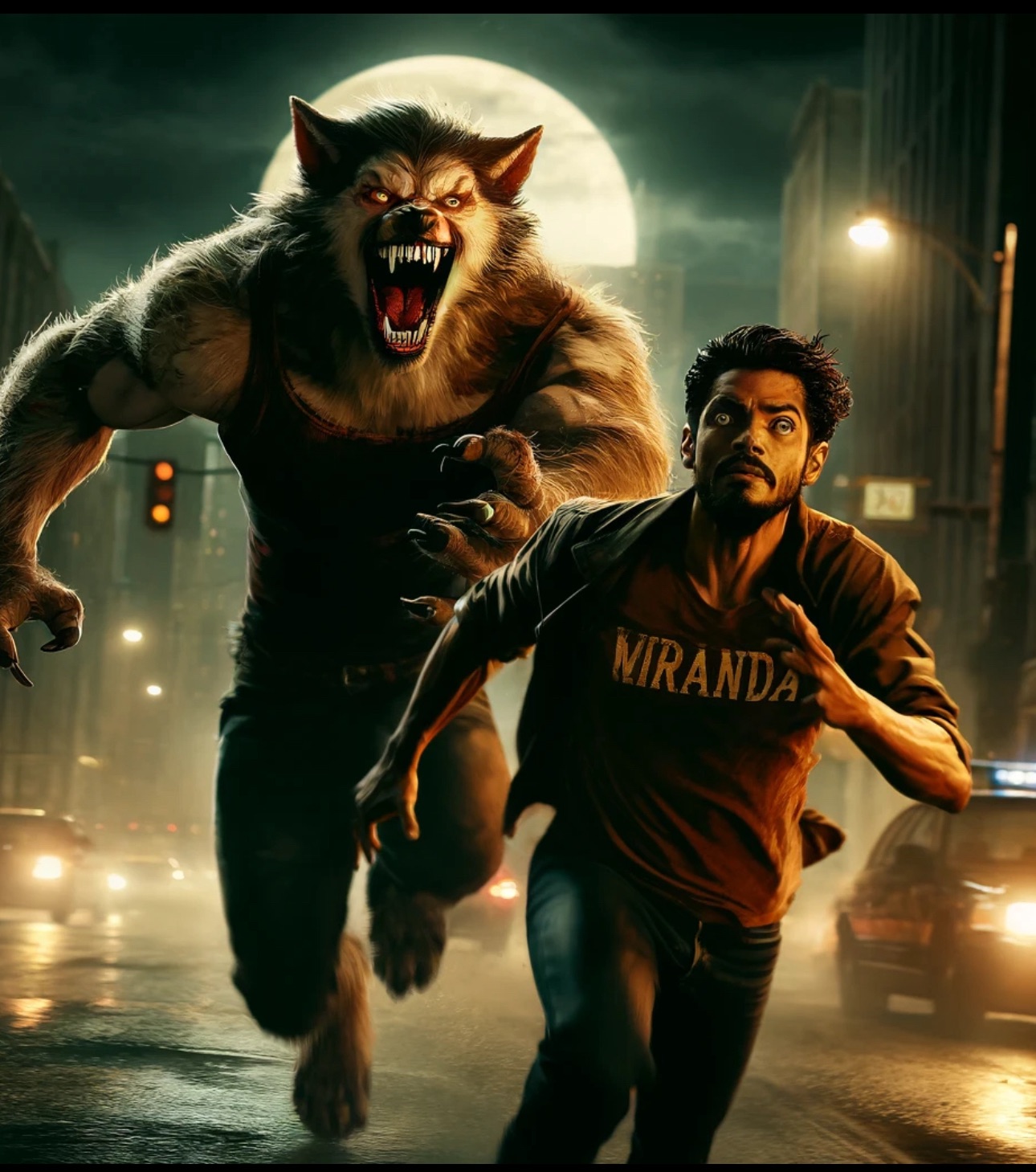
If a criminal wants to commit a crime and get away with it, Wayne County Circuit Court in Detroit is the place to be. Take Aron Miranda, a 24-year-old who sold counterfeit pills laced with fentanyl, resulting in the death of a Birmingham boy. Miranda was also caught with 11 illegal firearms, cocaine, fentanyl, and a mass of pills he sold mainly through Snapchat.
Miranda’s arrest was made by Birmingham police since the victim was from Oakland County—Detroit police were not involved. Birmingham handed Miranda over with all the evidence needed for a conviction. Yet, in a predictable turn, Wayne County dropped the ball. Despite the overwhelming evidence and serious charges, Miranda received a minor personal bond and no tether. The expectation that he would voluntarily return for his court date was naive, given his criminal background.
Now, Miranda is a fugitive. Some believe he fled the country; others think he’s still in Detroit, continuing his criminal activities. There’s little confidence in Wayne County’s efforts to apprehend him. If you’re a criminal looking for a safe haven, Detroit seems ideal. You can sell drugs, kill people, and even if caught, walk away scot-free.
In a city where law enforcement appears ineffective, what’s stopping criminals from flocking here? In Detroit, it seems, the line between criminal and free citizen is blurred by a justice system that fails to enforce the law.
You don’t have to have much of an imagination to envision how vigilante’s are born……
As we peer through the rear-view mirror at the years 2015-2025, the contours of that tumultuous era appear both jagged and instructive. With the clarity that only hindsight affords, we now ask ourselves: was this the period that presaged the demise of the West, or was it merely a tempest in the teapot of history?
The decade began with a global landscape pockmarked by crises. Political upheaval, the resurgence of nationalism, and a pandemic that rattled the very foundations of societal norms—these were but a few of the seismic events that defined the period. The United States, that erstwhile beacon of democracy and economic prowess, found itself grappling with internal schisms as deep and abrasive as any since the Civil War.
It was a period characterized by the rise of populism, where figures like Donald Trump in the United States and other nationalist leaders across Europe commandeered the public discourse. They tapped into a wellspring of discontent that had festered in the underbelly of globalization’s promises, harnessing the fears and frustrations of those who felt left behind by a rapidly changing world.
Yet, as is often the case, the pendulum of public opinion swung with vigorous unpredictability. The West’s obituarists, who in their haste had drafted somber epilogues, perhaps underestimated the resilience of democratic institutions and the liberal order. Despite the cacophony of crises, the core structures held firm, battered yet unbroken.
The mid-twenties were a testament to the tenacity of these systems. Despite burgeoning cries that the liberal model had run its course, there emerged a renewed commitment to the principles of freedom, equality, and justice. This was not a smooth recalibration; it was contentious, often messy, and invariably incomplete. Yet, it was a definitive rebuff to those who predicted a rapid descent into irrelevance for Western democracies.
What then of the extreme divisiveness that marked those years? It is here that we glean perhaps the most poignant lesson. The divisiveness was, in no small measure, fueled by the echo chambers of digital media—platforms that often amplified the most extreme voices to the detriment of nuanced discourse. The societal polarization this engendered was palpable, reaching a crescendo in the early 2020s. Although, the greatest achievement that seemed to bring the country and the west a touch closer was the declaration of Fentanyl as a weapon of mass destruction in late 2024. Before the end of 2025 the military had demolished every Cartel and their annexes, and all who were caught selling counterfeit pills laced with the poison were sentenced to death and that was the end of what took more lives than 911, the pandemic, or any war since World War 2. And, thus far, no new cartels have been able to resurrect themselves.
Now, decades later, we appreciate the cyclical nature of history. The fissures that seemed so insurmountable have, in many respects, been bridged by a subsequent generation that views the ideological battles of their forebears with a mixture of bewilderment and instructive caution.
In retrospect, the decade from 2015 to 2025 was neither the nadir of the West nor an era of unmitigated calamity. It was a crucible moment, one that tested the mettle of institutions and the spirit of societies. The lessons gleaned from those years have informed newer, more adaptive approaches to governance and social cohesion.
Thus, as we look back from a vantage point of relative stability, we realize that our forebodings were perhaps overstated. The period under review was undeniably marked by trials and tribulations, but it was also a testament to the durability and adaptability of the Western model. It reminds us, in no uncertain terms, that the course of history is seldom linear and never preordained. The resilience of the West was not guaranteed—it was earned. And therein lies the fundamental insight of this retrospective examination.
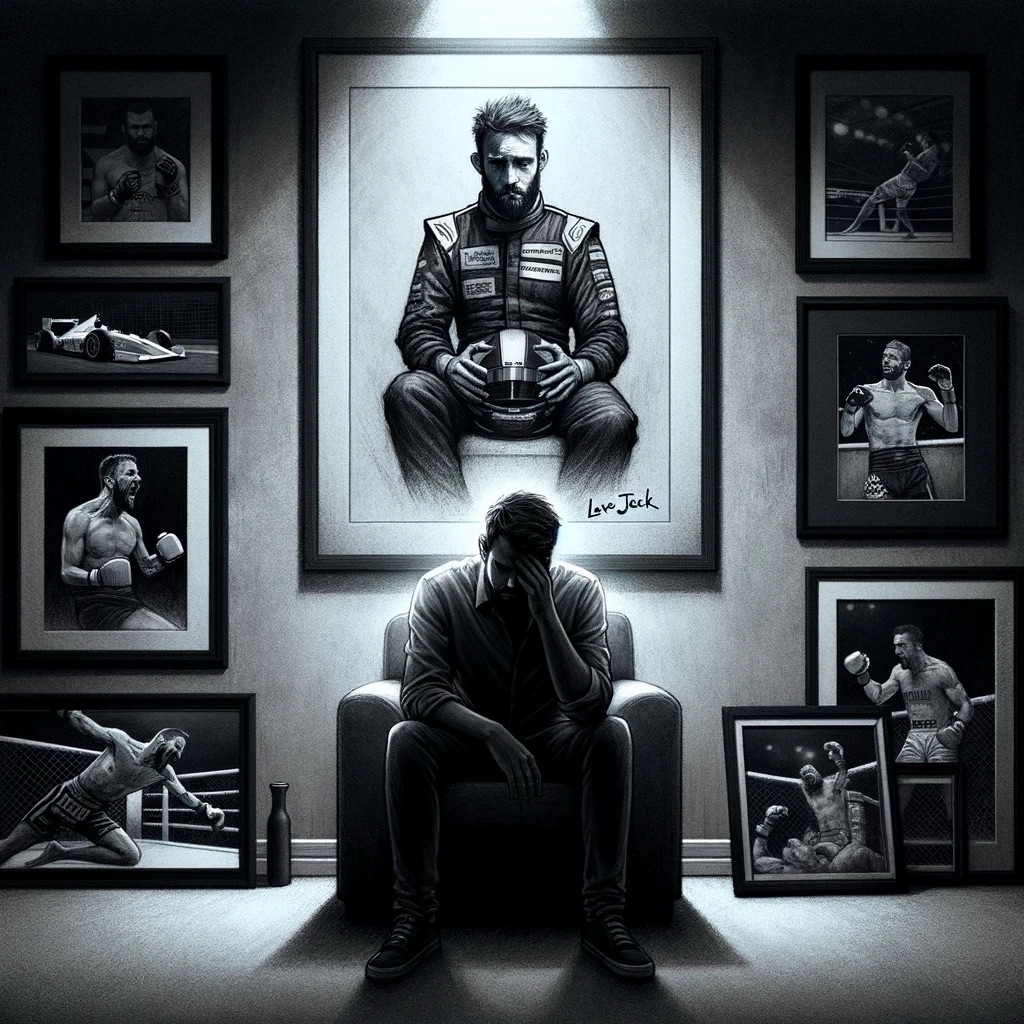
A father sits in a dimly lit room, cradling his grief, his heart a museum of memories. Conundrum portraits hang on walls, opposite sides of the room. He sits all too sober, wrestling demons of vengeance and angels of virtue, in a dry and colorless world of absence and abstinence, wishing for whiskey, but those days are long gone. Today, an empty glass of sorrow is casting shadows he calls good company. Thinking of the son, gone too soon, a story that ended mid-sentence, left him bereft with a deafening silence, unable to utter the words, choked by the excruciating lump in his throat. He tries to fight back with all he can muster but nothing’s as painful as the smoldering ashes of acceptance he’s left to swallow. Once happy go lucky, now lucky to catch a glimpse of happy, he looks up at the sky, doesn’t see blue, just black clouds and broken hearts that he hopes will cover up the retaliatory bomb shot he’d like to take on the Cholo who took Jack’s life. There’s no romance in this kind of pain, no poetic justice waiting at the end of a barrel, just a half-broken father, a fighter with a heavyweight heart, each day looking dead-eyed into the sorrow glass memories—yes, they bring tear drops, some days an ocean of sadness, others, enough to set the universe on fire. Dad, being from the old school, tries to hold it in, fighting the ache in his chest. Thinking of Jack, how they used to fight, side by side, in garages and rings, where blood and sweat were nuances of beautiful frames on the canvas. Now the fights are quieter, lonelier, punchy memories that jab back sharper than any right hook. There’s an art in being knocked down for the count and getting back up, but this one leaves dad sideways, like the pieces of Jack’s work that still hang on the wall, only they leave dad eternally face down, Jack’s pencil sketch interpretation of McDonagh’s movie, Locke, still dad’s favorite as he too, now driving alone, utters the same final words, “Fuck Chicago,” apropos, as he wallows through his internal prison, which, on a good day he calls, “An ode to all art and war left behind.” Holding an Irish rock in his hand, looking into the hag stone hole he paints in tricolor, hoping to find the answers. His brush strokes are now uppercuts, heavy, angry, and desperate. There’s no victory in this fight, no heavenly intervention, just a man, his clenched fists, and his ghosts. He stares into the bottom of his empty glass of sorrow, the boy’s face always looking back. Every day he wakes is another bell rung, another round, face to face with fate, and a middle finger from the gods he refuses to embrace. Heaves the stone through the glass he watches it shatter all over the room, walking over broken shards it occurs to Jack’s old man, he knows he no longer believes in much, but he does believe in this: the fight goes on, even if all he’s fighting is himself.
Embrace the futile pursuit of some obscure designer lingerie called Agent Provocateur because, obviously, the key to reviving a relationship is to awaken the lifeless corpse that’s been hiding under the covers for far too long.
Lavish yourself with Gucci, Louis Vuitton, and the overt indulgent, creepy pedophiles at Balenziaga because materialism cures all existential despair, right? Oh, and don’t forget that iPhone 15 that never leaves the clutches of your carpal tunnel-afflicted hands, a sheer masterpiece of exploitation, crafted by modern-day sorcerer children in a sauna they call an office somewhere in a COVID-infested Chinese cellar. Stick it nonchalantly into your coat pocket, ignoring empathy and instead celebrating the evolution of a digitally connected sixth finger that you might as well shove up your ass before the whole shit house goes nuclear. Of course, we mustn’t neglect the holy trinity of social media: TikTok, SNAPCHAT, and Instagram – the ultimate trifecta of meaningless validation. Spew the vile yet mundane nothingness of your existence, writing paragraph upon paragraph in excruciating detail because nothing says ‘I’m alive’ like sharing your breakfast choices, bowel movements, and Cinnabon recipes, even if it means ignoring the glaring truth that no one gives a fuck. And, while you’re scrolling through the virtual assembly line of wall to wall shit, stalk ex-flames, comparing their train wrecks to your dumpster fire while subconsciously hoping for any flicker of validation. Get a tattoo that reads “personal privacy is for losers” as you realize all of humanity is just an Excel sheet of cold data… then get on Snapchat in hopes of squashing that mountain of anxiety growing in your chest, only to score some cheap, counterfeit Xanax made by a slimy Sinaloa cartel terrorist who’s loaded it with enough Fentanyl to wipe out an entire sorority. And then, in an act of pure disassociation and impulse, embrace your inner stand-up comedian, by joking about sensitive topics you scream out-loud in overcrowded elevators, “not a single fucking life matters, so why not get the abortion, or don’t, have that tax write off and let the baby change its gender when she turns four” Hope you get canceled because nothing’s funnier than human suffering with no hope of redemption. Reinvent historical events, or better yet, pretend they never happened, especially if they don’t fit the lie of your twisted narrative. Embrace losing yourself in the maze of a 9-to-5 cubicle farm that slowly crushes the soul from those hipster sneakers you once bought for 12 dollars at a flea market. All while telling yourself, ‘see, I’m not shallow .’ And pass this legacy of despair down to your children because suffering is a family heirloom, after all. Cherish your unfulfilled promises as they gather dust alongside the mantel of participation trophies and shattered dreams. Bask in the glow of your own repeated failures like a moth drawn to the same broken lightbulb. Observe the déjà vu of history because originality is overrated, and everything new is just something old and forgotten. Embrace that you’re merely, at best, below average, hide your tears with a smile, kiss your loved ones goodbye, one disappointment at a time. Fade away into obscurity, bit by bit, until you’re nothing but a distant memory to your own mother. Fall in love with this joke, this depressing carnival of life, and embrace every last ounce of mediocrity straight to the grave.
So, you’re itching to surf the savage swells of production, eager to plummet into the void where the only beacon is the frenzied luminescence of creativity colliding with deadlines? Strap in, for you’re about to embark on an expedition through the annals of time, escorted by tales of the damned, navigating through the chaos with nothing but sheer audacity.
Let’s kick this off with a smidge of history, tinged with the cosmic irony of a universe so bizarre it might have sprung from the depths of a George Lucas fever dream. Picture this: the Producer of old, nothing more than a watchman, rooted beside their mailbox, longing for the day “a job” might land in their lap. A silent guardian, never daring to question the narrative, the purpose, or the mechanics. Simply a vessel for another’s dream.
Now, let me take you down a rabbit hole of personal revelation, through the lens of a career that’s ricocheted between the peaks of award-winning euphoria and the gutters of despair so deep, they’d make Dante’s Inferno seem like a stroll in the park. From crafting ads that snagged accolades, steering documentaries and Super Bowl commercials, to navigating the stratosphere as a Chief Creative Officer, I’ve worn the hats. Yet, the role that tested the very fabric of my being was that of the Producer, and for a spell, the Executive Director of Integrated Production. Amidst the pomp and circumstance of public victories, I’ve danced with demons in the shadowy recesses of failure and self-doubt. Hence, I preach: confidence is but a fleeting specter for us mortals.
ADVANCE—
Catapult to the tumultuous now of 2024, where lounging idly, fingers intertwined, awaiting the muse’s grace or a project’s embrace, is as archaic as the analog tones of dial-up. The modern Producer is an entity unto themselves: a renegade, a disruptor in the creative tapestry, a bringer of bedlam and brilliance. Gone are the days of mere paper-pushing and deadline wrangling; behold the digital circus’s ringmaster, synchronizing the celestial dance of stars and strategy from inception.
My tenure taught me the audacity to compete, to present ideas and scripts not as bids for glory, but as offerings to the collective genius. Beware, for if the shadow of bureaucracy and the specter of politics deter you, this path is fraught with peril. My method? Relentless toil. A dash of competitive zeal blended seamlessly with an unyielding spirit of camaraderie. Present your ideas with open palms—gifts to those who find them worthy. This isn’t about accolades; it’s about being an indispensable arsenal, a beacon of tenacity and resilience amidst the inevitable storms of rejection.
In your odyssey, you may align with digital seers, strategy savants, and the odd account executive (their numbers etched in your mental Rolodex). Should you possess the audacity, you might just ignite a project with a mere hunch, a flutter of innovation, or a gadget that catches your fancy. Dare to whisper, “Behold,” and watch the dominoes tumble.
Is there a knot in your stomach? Excellent. That’s the essence of challenge permeating the air. Echoing the sage words of Seth Godin, the true arena lies in igniting the flame of innovation without a formal summons. The realm is sparse, populated by those few souls brave enough to court the ire of the creative deities. Yet, having battled in these trenches, I assure you, the pantheon of creativity craves not solitude but the spark of collaboration.
Questioning, probing, diving into the abyss with eyes wide open—this becomes your shield, your lance. In an epoch where the pace of demand transcends sound, your inquisitiveness will illuminate the shadows, revealing treasures hidden well beyond the confines of the brief. You need not the laurels of academia to conquer this domain, only the raw courage to dream, to forge, to steer your vessel through the maelstrom, and dock upon the shores of the Imaginative beyond.
If you enter the fray, merely a cog, obedient and unassuming, you squander a seat that might have been filled by a revolutionary. It’s a simple task to fade into the background, to nod in acquiescence, to play the part of the obedient soldier. Yet, in shunning the challenge, in eschewing the call to arms, you are not merely stationary; you are in retreat.
So, as you traverse the urban sprawl or meander through the morning’s quietude, whisper to yourself: I am the Creative Producer of 2024. Fearless. Focused. A maelstrom of passion and purpose, defying the chains of bureaucracy, weaving through the mire of negativity, embracing the winds of change with every fiber of my existence. I am the vanguard of evolution, a harbinger of what’s to come. And so, as the first light of dawn breaches the horizon, a reminder: This journey, this odyssey through the kaleidoscopic chaos of creation, began with a simple, yet profound query—do you dare to navigate the tempestuous seas of production?
The gauntlet, tossed at your feet amidst the ruins of convention and the specter of the mundane, beckons. It’s more than a challenge; it’s a call to arms for those brave enough to wrestle with the abyss, where the only beacons are your wit, your will, and the wild heart that beats within.
Do you pick it up? Because remember, my soon-to-be frazzled friend, in the grand tapestry of creation, it’s not just about surviving the tempest—it’s about becoming the storm.
In a dimly lit room, with the flicker of a single, dying light bulb overhead and the hum of the city’s night leaking through the cracked window, there it sits—the essence of a world spoiled to its very core, marinated in its self-entitled glory. It’s an American tradition, not the kind bound by the pages of history books or celebrated with fireworks, but the kind you see in the glazed eyes of the too-many, wandering through their days like kings of a forgotten kingdom, unaware of the ground beneath them or the sky above.
The streets are filled with the sounds of their discontent, a chorus so constant it blends into the backdrop of daily life. “The wifi’s too slow,” they cry, in cafes where the coffee beans have traveled further than their complaints ever will. “There’s nothing good on Netflix”, they moan, flipping through a thousand channels on their flat screens that glow like false moons in their too-big houses. They drive cars that could feed families for months, to jobs they say suck the soul from their bones, not pausing to think of those who sift through bones for a meal.
This great American spoilage, it’s not just in the things they have but in the air they breathe, taken for granted like the last cigarette in a pack, smoked without thought or care for where the next might come from. It’s in the way they view the world, through lenses tinted with convenience, unable to see the beauty in struggle, or the strength it takes to simply survive in places where the ground is harder, the water scarcer, and the sky a luxury afforded only to the dreamers.
They throw words like “hardship” and “struggle” into conversations like loose change, not knowing the weight of those coins in pockets other than their own. They speak of rights as if they were the only ones to have them, blind to the fact that for some, rights are not a given without a battle fought every day.
And yet, amidst this spoiled landscape, there are those who see, truly see, the absurdity of it all. They’re the ones that nod to one another in passing, those who understand that to appreciate the light, you must also know the dark. But they are the whispers in a storm of shouts, the flickers of truth in a sea of contented ignorance.
So here’s to the spoiled, the entitled, the blissfully unaware—may you one day find the beauty in a single blade of grass, the wealth in a shared meal, the fortune in a breath of air without having to experience some godawful tragedy in order to gain perspective.
Until then, the world waits, not so patiently, for you to regain consciousness and see the value of looking passed your sixth finger, which is now a mobile device, a screen serving as a detour to personal hell. We’re anxious for you to wake up and see that while the American Dream may have always been a nightmare, there’s so much still out there, sprawled out like a roadmap of a million smiley faces, waiting to be titillated , waiting to be traveled and truly seen.
In the chaotic and often unforgiving realm of life, where creativity intersects with the raw edges of grief, I’ve found myself adrift in a sea of unimaginable loss. The sudden departure of Jack, my vibrant 19-year-old son, whose potential was extinguished by a sinister and lethal counterfeit pill, has left me grappling with a reality so cruel, it not only threatens to consume my every moment but worse, anyone who might happen to cross me. This tragedy, born from a moment of youthful anxiety and a fatal trust in the shadows of social media, has forced me into a daily confrontation with sorrow so profound, it challenges the essence of my existence.
How does one navigate the professional world when every morning begins with a brutal reminder of what has been lost? How do I muster the strength to engage with my creative passions when my heart is besieged by despair? The answer, paradoxically, lies in the wisdom imparted to me by my father, a lesson in the delicate balance of care and detachment: “Sometimes you have to care enough to know not to care too much.” This philosophy, akin to stoicism or perhaps a form of self-preservation, has become my mantra, allowing me to don a mask and cape, not as a disguise, but as armor against the vulnerabilities that threaten to undermine my resolve.
My work, in the aftermath of Jack’s untimely death, has transformed. Not because the pain has fueled my creativity, but because in the face of absolute loss, fear and stress have lost their grip on me. There is a certain liberation in confronting the worst that life can offer; what once seemed like insurmountable pressures now pales in comparison to the weight of my grief. It is not delusion but a profound shift in perspective that guides me. In this state of heightened clarity, I immerse myself in the creative process, channeling my energies with unfettered focus, dedicating a full 120% of myself to the task at hand.
Yet, this intense dedication to my craft is not without its counterbalance. Each day concludes with a ritualistic shedding of the day’s emotional armor. I retreat to the gym, where I spend hours channeling my anguish into physical exertion, a therapeutic release that allows me to confront the next day with renewed strength.
This cycle of creativity and catharsis has become my lifeline, a means of navigating the treacherous waters of grief while clinging to the remnants of passion that define my existence. It isn’t just about me that I write this, it is a testament to the resilience of the human spirit, a reminder that even in our most vulnerable moments, we are capable of extraordinary feats.
Influenced by the grit of William Burroughs, the spirit of Hunter S Thompson, and the heart of Rocky Balboa or David Goggins, I own the mental zoo in my head and that’s how I show up. And, it is this raw vulnerability and a poignant embrace of life’s absurdities, I share this journey. It is a narrative steeped in pain but underscored by a fierce determination to persevere, to create amidst the ruins of loss, and to find meaning in the act of survival. This is not just my story, but a reflection of the universal struggle to find light in the darkest of times, to transform sorrow into something profoundly beautiful and powerful. So, if you find yourself frazzled in your own thoughts, most likely steeped in doubt or nagging worry, you can flip the script and change the movie in your mind by simply looking inward for a moment, digging deep for some gratitude, like the 19 amazing years I did get with Jack, then take a deep breath and put one foot in front of the other and keep going. Go. Go.
Maybe Andrew Tate could learn something from these two?
Cheney vs Tyson
In the grand theater of the modern age, where the spotlight often falls on men of power and pugilism, two figures stand out as seemingly polar opposites: Mike Tyson, a titan of the boxing ring, whose fists spoke with a ferocity unmatched, and Dick Cheney, the political heavyweight, whose maneuvers in the corridors of power were as strategic as they were formidable. Yet, beneath the surface of these two alpha males, lies a tapestry of similarities that binds them in a curious fellowship of spirit and ambition.
Tyson and Cheney, each in their respective arenas, demonstrated an unparalleled mastery over their domains. Tyson, with his explosive power and ferocious intensity, dominated the heavyweight division, instilling fear and awe in the hearts of his adversaries. Cheney, on the other hand, wielded his influence in the labyrinthine world of politics with a calculated precision, playing a long game that would secure his legacy as one of the most powerful vice presidents in American history. Both men, through sheer force of will and undeniable prowess, ascended to the pinnacle of their fields, commanding respect and, in many cases, a wary distance from those around them.
However, their rise to the top was not without its share of controversy and polarized opinions. Tyson’s career, marred by legal troubles and personal demons, often overshadowed his achievements in the ring. Similarly, Cheney’s political maneuvers, particularly those surrounding the Iraq War, have been the subject of heated debate and criticism. Both figures, in their quest for dominance, seemed to court controversy as much as they did success, blurring the lines between villainy and heroism in the eyes of the public.
Despite their differences—one a gladiator of the physical realm, the other a strategist of the political—their paths share a curious parallelism. Both Tyson and Cheney exhibit traits of the quintessential alpha male: resilience in the face of adversity, a relentless drive for supremacy, and a complex relationship with power. Their legacies, while fraught with contention, are undeniably etched into the annals of history, serving as a testament to the indomitable spirit that propelled them forward.
Yet, it is in their vulnerabilities that we find the most humanizing thread connecting these two titans. Tyson’s later years, marked by a quest for redemption and self-discovery, reveal a man seeking to reconcile with his past. Cheney, with his well-documented health struggles, presents the image of a man who, despite his steely exterior, is not immune to the frailties that beset us all. In these moments of frailty, they are stripped of their larger-than-life personas, reminding us that beneath the veneer of the alpha male lies a complexity that is both profound and universal.
In the final analysis, Mike Tyson and Dick Cheney, for all their differences, embody the dualities that define the human condition: strength and vulnerability, triumph and controversy, power and its consequences. Their lives serve as a fascinating study in contrasts and similarities, offering a glimpse into the enigmatic nature of greatness and the paradoxical journey of those who achieve it.
In the swirling vortex of creation, where the mundane meets the magnificent, we often find ourselves teetering on the edge of chaos and genius, longing to unleash the artist within. Yet, herein lies the grand deception—the seductive call of creativity for creativity’s sake—a siren song that lures us into the abyss of aimlessness. It’s a wild, frenetic dance around the proverbial table of desserts, much like my compatriot in sugar-laden temptation, circling his desires with a voracious yet misguided hunger. This, my friends, is where the narrative takes a sharp turn, diving headfirst into the gritty truth that every stroke of genius is birthed from the womb of strategy.
The old adage, “think outside the box,” has been peddled by well-meaning gurus and pseudo-philosophers for ages, but I’m here to tell you that’s a load of shit. To truly transcend, one must not float aimlessly in the ether of abstraction but rather, confine oneself within the box—embracing its constraints, feeling its walls press in until the pressure transforms coal into diamonds, or better yet, distills our creative essence into its purest form.
It’s in this crucible of creativity, this forge of innovation, where the true alchemist operates. You see, the game isn’t about breaking free from the box with brute force; it’s about understanding it, manipulating its dimensions, and eventually, creating your way out with the finesse of a master thief in the night. This is how problems are solved—not by escaping the challenge, but by delving deeper into its core, stripping away the superfluous until only the solution remains, stark and brilliant in its simplicity.
Take, for example, the curious case of my friend, a man at war with his own desires, ensnared by the demonic deity of sugar. His dance of temptation around a table of desserts serves as a perfect metaphor for the creative process gone awry. In his quest for sweet satisfaction, he overlooked the solution that lay not in succumbing to temptation but in seeking an alternative that addressed the underlying problem. When I suggested a handful of almonds as a substitute, it was more than a mere snack—it was the embodiment of the creative brief itself.
Alas, the almond is our guiding light, our north star in the murky skies of creativity. It represents the essence of problem-solving—identifying the core issue and addressing it with a solution that is both innovative and practical. This, dear readers, is the heart of creativity that matters. It’s not about painting the most avant-garde masterpiece or composing a symphony that moves the soul to tears; it’s about finding the almond amidst the dessert table of life’s challenges.
So, as we embark on this psychedelic journey through the labyrinth of creativity, let us not be seduced by the allure of art for art’s sake. Instead, let us embrace the confines of our proverbial box, using it as a canvas for our masterpiece, a stage for our symphony. Let the almond be our muse, guiding us toward solutions that are not only creative but meaningful and effective. For in the end, true creativity isn’t just about breaking free—it’s about breaking through.