Not the boots. Not the jacket. Not the watch pretending time means anything.
It’s the uneasy stomach. The golf ball lodged in the throat. The cracked heart stitched together with bad sleep, caffeine and whatever people call “moving on.”
Those are old. Ancient, really.
Hand-tailored over years by loss, disappointment, memory, guilt, love and the quiet observations you never talk about out loud because everyone else is busy performing wellness like it’s an Olympic sport.
I wear old conversations that never ended properly. Old funerals. Old versions of myself I buried but still hear scratching around under the floorboards at 2 a.m.
None of it was designed by me.
It was made for me.
By every slammed door. Every hospital hallway. Every “I’m fine” that wasn’t. Every moment you realized the world keeps spinning with horrifying confidence no matter what it takes from you.
He had an Apple IIe back when Michigan still thought a “home computer” was something you yelled at. My father collected firsts the way other men collected regrets. Not to brag — to know. He wanted to see how the future worked before it decided what it was.
That machine sat in our house like a glowing confession booth. Green letters on a black screen. The future, stuttering.
Mine showed up in 1997.
By then, the future had learned how to sell itself.
That was the year I became that guy — the one who corrected people at parties over a commercial.
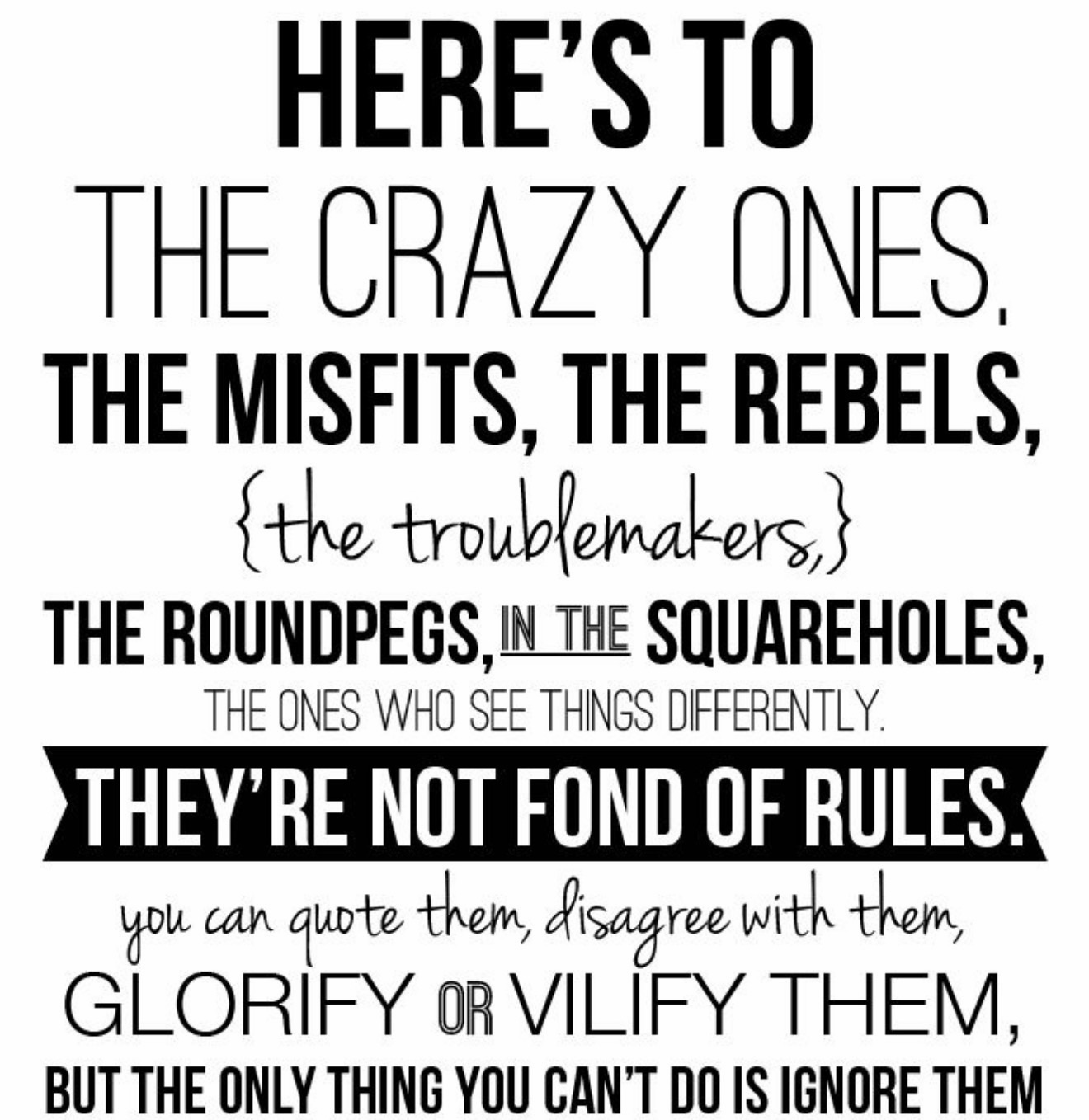
“Jobs didn’t write that,” I’d say, beer in hand, moral high ground wobbling under my feet. “That’s beat poetry in a business suit. He just stole it and slapped a logo on the ribs.”
I called it blasphemy — using dead poets to move plastic and silicon.
But I respected the hustle.
Because in one clean, arrogant move, he didn’t sell you a computer.
He sold you a seat at the same table as Einstein and Gandhi and Picasso.
Buy this machine and maybe, kid, you’re one of them now.
I couldn’t tell if Jobs was in a garage somewhere burning his fingers on a soldering iron…
Or just the best preacher Silicon Valley ever produced.
While all that was flashing across the TV, I was in my room discovering a different sin.
I started writing.
In 1997, writing poems on a computer felt like cheating on paper. My classmates were bleeding into notebooks, breaking hearts in cursive. Love songs, death songs, soft-focus misery.
I was staring at a screen, trying to figure out how to be a hard version of Sylvia Plath without driving my own car into a lake.
I tried pretty metaphors. Lakes as mirrors. Souls as reflections.
I hated all of it.
So I wrote my first real poem instead:
“Dionysus and the Silver Spoon.”
It was about a man who treated excess like oxygen. A drunk god in a borrowed suit who thought the world owed him women, wine, and a standing ovation.
It wasn’t mythology.
It was me with better lighting.
And that’s when the joke landed.
There I was, calling out Jobs for dressing up as Kerouac…
While I was wearing Plath and dead gods like a Halloween costume, hoping someone in the room would clap.
That computer didn’t teach me how to write.
It taught me how to look at myself without flinching.
It showed me the hunger. The vanity. The quiet little prayer every creative mutters when no one’s listening:
There’s enough rot in a regular person to fuel a thousand comment sections and still have leftovers for Sunday.
You don’t need monsters. You just need people with slogans and something to protect.
The loudest about mercy keep their hands clean by pointing.
The loudest about love need an audience or it spoils.
The loudest about peace sleep with one eye open and a thumb on the trigger they swear they don’t own.
God-talkers rent God. They don’t live with Him. Peace-talkers rehearse it like a line they keep forgetting. Love-talkers mean approval and charge interest.
Watch the ones with microphones. Watch the ones with certainty. Watch the ones who underline books but never bleed on the page.
Watch the ones who romanticize hunger or mock it— both are tourists.
Watch the fast clappers. They clap to hear themselves.
Watch the ones who police language— they’re terrified something feral might get loose and name them.
Watch the ones who need crowds. Alone, they evaporate.
The average man isn’t harmless. The average woman isn’t gentle. Their love wants a receipt. Their love wants witnesses. Their love wants to be normal so it doesn’t have to be brave.
And here’s the part nobody says out loud:
There’s brilliance in their resentment. A precision. A teamwork. A choreography.
They can’t stand silence because silence asks questions. They can’t stand solitude because it doesn’t applaud.
They can’t make anything that didn’t already exist, so when they fail they blame the room, the time, the culture, the weather, you.
They don’t understand art because art doesn’t ask permission. They don’t understand love because love doesn’t negotiate.
So they’ll tell you you’re doing it wrong. That your grief is excessive. That your joy is suspicious. That your freedom is offensive.
Then they’ll come for you not messy, not emotional— but clean.
Their hatred is efficient. It shines. It passes inspections. It wears credentials.
It doesn’t rage.zwzwq It executes.
And that— that is the only masterpiece most of them will ever finish.
(The Diagnosis Was Wrong, But the Confidence Was Strong)
“Doctor, the patients are restless.” Good. If they were calm, I’d think the meds were working. Hand me the clipboard— the one covered in my old resentments and your new insurance co-pays.
The refill
I need a refill on whatever I prescribed last time. Don’t check the dosage— I wrote it during a blackout and the AMA refused to comment.
Bring in the next disaster. Who is it? Ah yes— the man allergic to responsibility and addicted to horoscopes and whores. Put him in the trauma bay; tell him Mercury’s been in retrograde since his third divorce, and Amber retired anyway.
And someone get me my reading glasses. Not to read— just to look smart while I guess wildly.
The nurse asks, “Doctor, are you okay?” Of course not. I’m a mental health professional. We don’t heal— we outsource.
Now… where were we? Ah yes, the refill.
RX #1: Take one truth with two lies and chase it with a childhood memory you haven’t processed yet.
RX #2: Apply gratitude directly to the wound. If burning occurs, good. It means you’re still alive.
RX #3: Stop saying “everything happens for a reason.” Everything happens because people are irresponsible and God clocks out early.
Next patient, please.
Mr. Ego returns— as usual— complaining of a swollen sense of self. I recommend ice. Preferably Antarctica.
Miss Co-Dependence is back too. We tried cutting her off last visit, but she refused because she “didn’t want to be rude.” We’ll keep her overnight.
And you— yes, you— the one pretending to be fine because you bought a new candle. You need a refill most of all.
Your diagnosis? Life. Chronic. Terminal. Relapsing and remitting but mostly just remitting.
The nurse hands me a chart. The chart hands me my fate. I stare into it, horrified. “My god… is this my handwriting?” No wonder half the patients left the building enlightened and the other half started a podcast.
Time of day: who knows. Cause of day: capitalism. Treatment plan: “fuck around and see.”
I sign the discharge papers with the confidence of a televangelist and the accuracy of a man throwing darts in the dark.
Before I leave, I grab my coat, my stethoscope, and the final universal truth:
Nobody’s cured. We just refill the prescription until the bottle or the body runs out.
Fade to black. The credits roll. Freud slips again.
Some of us were dumb enough to think we were chosen. Destined for greatness. I was one of those fools.
Then life swung for the skull—my father gone when I was just twenty-four, my son gone at nineteen. That’s the punchline. And I’m still here, scribbling like a clown juggling knives at his own funeral.
Every line I write turns to rope. And rope’s a funny bastard—you can climb it, you can hang from it. Lifeline and noose, same damn thing.
And here’s where I laugh at myself: I can’t stand writers who always find a way to make it about them. But don’t mistake this for that—this isn’t me making it about me. This is me making it about you, making it about me. That’s the kind of pretzel you twist into when you’ve got nothing left but your own shadow to wrestle with.
Greatness? That’s the carrot they dangle so you’ll chase yourself into the grave. The truth is simpler: I’m under the gallows, grinning through broken teeth, laughing at my own execution, and the only reason I keep writing is because hanging myself with my own words is the one thing I’ve ever done well.
I used to laugh at everything. Irony was my shield. Sarcasm, my second skin. But then life walked in, uninvited, and knocked the mic out of my hand.
There was a time I could joke my way through anything. Grief. Guilt. Failure. Give me a tragedy, I’d find the punchline. Not because I thought it was funny— but because laughing meant I still had control.
Humor was my armor. If I could reduce it to a one-liner, I didn’t have to feel it. I just had to deliver it.
But eventually, the jokes stopped landing. Not because they weren’t clever. But because the pain got louder than the laugh track in my head.
You can’t joke your way out of a child’s funeral. You can’t riff your way around a hollow chair at the dinner table. And you can’t meme your way back to who you were before everything shattered.
There’s a point— when irony stops being a coping mechanism and starts becoming a coffin.
It’s not edgy. It’s not cool. It’s just another way to keep people from getting too close.
And I’ve had to reckon with that. Because while I was busy being the emotionally unavailable Bukowski of the grieving dads club, I was also bleeding underneath the punchlines.
So now? Now I still laugh. But not to deflect. I laugh because some shit is absurd and crying all the time doesn’t pay the bills. But I’ve also learned to sit in the silence after the joke. To let it echo. To let the truth behind it hang heavy.
And if you’ve felt that— if your jokes are starting to sound like pleas for help wrapped in wit— just know this:
You’re not weak. You’re waking up.
You don’t have to be the strong one. You don’t have to be the funny one. You just have to be real—even when it’s raw and ugly and doesn’t trend.
That’s it for now. Laugh when you can. Cry when you need. Bleed in front of people who’ve earned the right to see it. And if the joke stops being funny? That’s your cue to finally speak the truth.
she fucked 1,245 men in a day they called it empowerment i call it a goddamn endurance test with a participation trophy and a yeast infection
feminism? sure. if you can sell it if you can pose for it if you can fuck it and file a tax return after
they say women are free now but I’ve seen more chains in lace than I ever did in iron the old chains told you what you were these new ones whisper it in the middle of the night while you scroll, naked trying to be wanted by strangers who wouldn’t stop to piss on you if you were on fire
patriarchy? at least it was honest it said: “you’re mine.” now it says: “you’re free to degrade yourself however you see fit” and sends you a promo code for lube
this isn’t revolution it’s rebranding with lipstick, hashtags, and a ring light everyone’s selling their soul some just get better lighting
i miss the women who didn’t have to prove anything didn’t need 1,245 pricks to feel something didn’t scream liberation while crying after the 8th faceless man and another fake orgasm
but what the hell do i know i’m just a recovering drunk of 24 years I guess sobriety is watching freedom take its clothes off for tips…equality, my ass.
The bar doesn’t give a damn what’s between your legs. v It only wants what’s in your liver.
You weren’t “winning.” You were bleeding for attention and calling it strategy.
You didn’t outdrink the boys. You auditioned for their approval and called the cuts trophies.
That’s not rebellion. That’s just self-harm in a room full of spectators who forgot your name the second the bottle tipped.
And Johnny? He didn’t hold you like a barred window. He left you outside of one— face pressed to the glass, mistaking cold for intimacy.
You didn’t skip the wake. You skipped the reckoning. Drove past the house, hoping the blood had congealed into meaning.
Here’s the truth you won’t tattoo on your thigh: You bled for a cigarette, and the only smoke left was your own delusion curling into the ceiling fan.
You weren’t the champion of quarters. You were the cautionary tale passed around like a lighter— sparks, burns, and no one remembers who lit the match.